
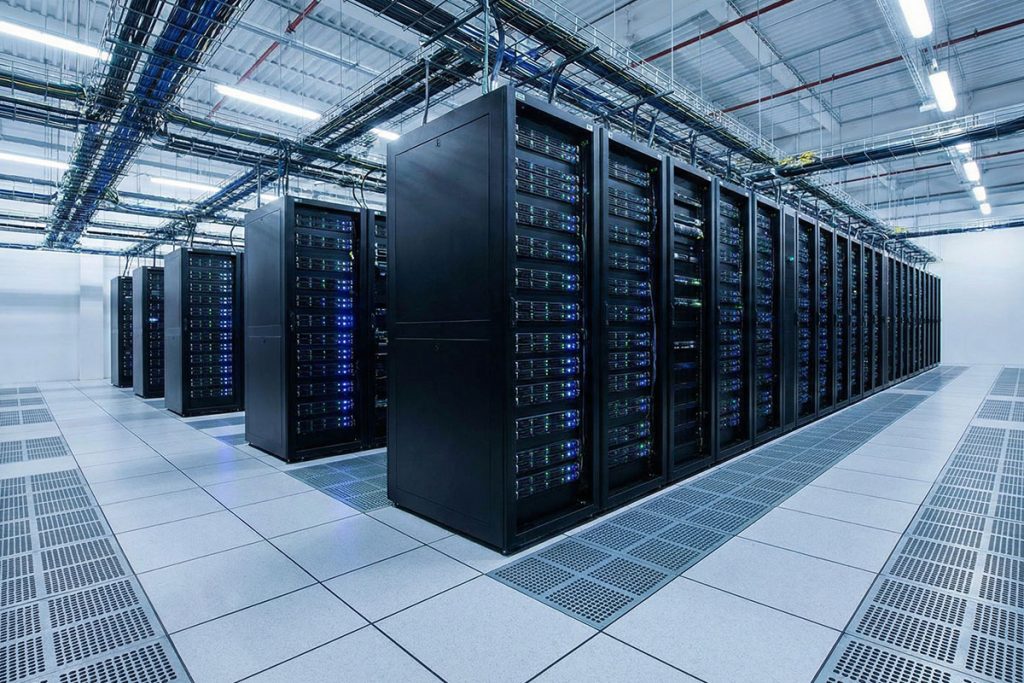
Artificial intelligence is reshaping nearly every aspect of modern data center design, and it’s tempting to frame that shift purely in terms of hardware—faster GPUs, denser clusters, more powerful accelerators. But the more consequential story is happening in the building itself. As organizations deploy increasingly powerful GPUs and high-density computing clusters, traditional facility designs are reaching their practical limits in ways that have nothing to do with the chips and everything to do with power delivery, cooling capacity, and structural infrastructure that was never designed for this kind of thermal and electrical density.
The industry’s response has been a shift toward hybrid cooling strategies that combine the strengths of air and liquid cooling rather than choosing one over the other. Rather than replacing traditional cooling methods wholesale, hybrid architectures integrate multiple technologies to improve efficiency, support higher rack densities, and prepare facilities for growth that’s arriving faster than most infrastructure planning cycles are built to accommodate.
For organizations planning new AI infrastructure or upgrading existing facilities, understanding how these changes affect building design is becoming just as important as selecting the right computing hardware. A facility with the best available GPUs but an inadequate cooling and power strategy underneath them isn’t actually ready for AI workloads—it’s a bottleneck waiting to be discovered during commissioning. This guide looks at what’s actually changing at the facility level, how hybrid cooling works, and why raised floor infrastructure remains just as relevant in this new environment as it’s ever been.
TL;DR Quick Summary
- AI workloads are driving rack power densities well beyond what conventional air-cooled data center designs were built to support.
- Hybrid cooling—combining liquid cooling for high-density compute with air cooling for the rest of the facility—is emerging as the dominant strategy rather than a full replacement of one technology by another.
- Raised floor systems don’t disappear as liquid cooling adoption grows; their role shifts toward supporting power distribution, cabling, and the air cooling that still handles a significant share of the room.
- Facilities designed for adaptability—modular infrastructure, reserved capacity, and flexible airflow—are far better positioned to absorb the next generation of AI hardware than those designed to today’s specifications alone.
Why AI Is Transforming Data Center Design
The easy version of this story focuses on GPUs getting faster. The more useful version focuses on what that speed actually demands from the building around them: rack power density, cooling capacity, airflow management, and structural loading are all being pushed into territory that conventional data center design didn’t anticipate.
Rack power density is the clearest example, and the trend is worth putting in context. Enterprise data centers historically operated in a fairly narrow band of power density per rack, typically low enough that conventional underfloor air distribution could comfortably keep pace. Modern AI clusters have broken well past that range, with GPU-dense racks now consuming multiples of what a conventional enterprise rack required just a few years ago. Industry projections generally point toward that trend continuing rather than leveling off, as accelerator hardware keeps getting more powerful and organizations pack more of it into the same physical footprint to maximize compute density per square foot of expensive data hall space.
That shift matters to facility infrastructure in ways that compound rather than stay isolated. Higher power density means more heat generated in the same physical space, which means cooling systems designed around older density assumptions can fall short even when they’re performing exactly as originally specified. It also means structural loading assumptions need revisiting, since AI-optimized racks—dense with GPUs, high-capacity power supplies, and often liquid-cooling hardware—can weigh considerably more than the server racks a facility’s floor and structural design were originally built around. A facility that hasn’t reassessed these assumptions against its current or planned equipment isn’t just risking inefficiency; it’s risking a genuine structural or thermal mismatch between what the building was designed for and what’s actually being installed in it.
Why Air Cooling Alone Is No Longer Enough
It would be a mistake to frame this shift as air cooling becoming obsolete—it hasn’t, and for a large share of data center infrastructure, it remains the right tool for the job. The more accurate framing is that air cooling alone is no longer sufficient for the highest-density portions of a modern AI facility, even though it continues to excel everywhere else.
Air cooling, delivered through conventional underfloor air distribution, data center infrastructure built around perforated panels, and well-designed containment, remains highly effective for networking equipment, storage systems, power distribution hardware, and moderate-density compute that doesn’t approach the thermal output of a fully loaded GPU cluster. It’s a mature, well-understood, cost-effective technology, and there’s no operational reason to abandon it for equipment it continues to cool efficiently.
Where air cooling runs into real limits is at the top end of rack density. Physics imposes a practical ceiling on how much heat air alone can efficiently remove from a small physical footprint—beyond a certain density, moving enough air to keep pace with GPU thermal output starts requiring impractical airflow volumes, excessive fan energy, or unrealistic underfloor pressure. Liquid cooling doesn’t face the same constraint, because liquid can absorb and transport far more heat per unit of volume than air, making it dramatically more efficient at extracting heat directly from the densest components in the rack.
The result isn’t a competition between the two technologies—it’s a division of labor. Liquid cooling handles the extreme, concentrated heat loads that air physically can’t keep up with efficiently, while air cooling continues handling everything else in the facility that doesn’t require that level of intervention. Understanding that division is the foundation for understanding hybrid cooling itself.
Understanding How Hybrid Cooling Works
Hybrid cooling refers to architectures that deliberately combine multiple cooling technologies within the same facility—and often within the same room—rather than standardizing on a single approach for every piece of equipment. It acknowledges that different hardware platforms generate heat differently, and that no single cooling strategy can efficiently support every workload in today’s high-density AI environments.
Direct-to-Chip Liquid Cooling
Rather than attempting to cool the entire server, this approach removes heat exactly where it is generated most intensely. Coolant flows directly through a cold plate mounted on the GPU or CPU, transferring heat away before it radiates into the surrounding air. Direct-to-chip liquid cooling has become the most common liquid cooling solution for AI accelerators because it scales effectively alongside the extreme power densities produced by modern GPU clusters.
Liquid Cooling Loops
Moving heat away from processors is only part of the equation. Closed-loop liquid cooling systems transport that captured heat from the rack to cooling distribution units, which then interface with the building’s chilled water or refrigerant infrastructure. These engineered loops make large-scale liquid cooling practical by efficiently carrying heat out of the data hall rather than simply relocating it elsewhere within the room.
Rear-Door Heat Exchangers
Some facilities choose to capture heat after it leaves the equipment rather than cooling individual processors directly. Rear-door heat exchangers mount a liquid-cooled heat exchanger on the back of each rack, removing heat from exhaust air before it re-enters the surrounding environment. Because this approach requires fewer modifications to the servers themselves, it has become a popular retrofit solution for organizations upgrading existing data centers.
Air Cooling and Containment
Even the most advanced liquid-cooled facilities continue to depend on carefully managed airflow throughout the data hall. Perforated floor panels, airflow grates, hot aisle containment, and cold aisle containment continue delivering conditioned air to networking equipment, storage systems, power distribution equipment, and other hardware that remains air-cooled. The underfloor plenum continues serving as a critical component of the facility’s overall cooling strategy rather than becoming obsolete.
Managing Dynamic AI Heat Loads
Cooling AI infrastructure requires more than handling high temperatures—it also requires responding to rapidly changing workloads. AI training jobs can push entire GPU clusters to sustained peak utilization for extended periods, while inference workloads often create short, unpredictable bursts of activity throughout the day. These constantly shifting thermal demands require cooling systems that respond dynamically rather than relying on static designs based solely on average expected loads. Successfully balancing liquid cooling, air cooling, and airflow management allows facilities to maintain consistent performance even as AI workloads fluctuate.
🏢 Industry Insight: Hybrid cooling isn’t a transitional phase on the way to fully liquid-cooled facilities—for most organizations, it’s the durable long-term architecture. Even as liquid cooling adoption grows for the densest compute, air cooling continues to be the most practical and cost-effective solution for the substantial share of equipment that doesn’t require it, which means most AI facilities should expect to operate hybrid systems indefinitely rather than treating air cooling as something to eventually phase out entirely.
Why Hybrid Cooling Doesn’t Eliminate Raised Floors
One of the biggest misconceptions surrounding AI infrastructure is that the adoption of liquid cooling will eventually eliminate the need for raised access floor systems. In reality, the two technologies solve different problems and are increasingly designed to work together rather than replace one another.
Liquid cooling is exceptionally effective at removing heat directly from high-performance components such as GPUs and CPUs. By transferring heat away from processors using cold plates or other liquid-based technologies, it addresses the growing thermal demands of AI hardware that traditional air cooling alone can no longer handle efficiently.
Raised access floors, however, serve a much broader role within the facility. Beyond supporting underfloor air distribution where it is still used, they provide organized underfloor infrastructure for electrical distribution, fiber optic cabling, network infrastructure, and other critical building services. The accessible underfloor plenum also makes future maintenance, equipment upgrades, and infrastructure expansion significantly easier throughout the life of the facility—individual raised floor panels can be lifted to reach cabling or piping beneath them without disrupting the surrounding room, a capability liquid cooling infrastructure doesn’t replace or replicate.
Even in AI data centers that rely heavily on direct-to-chip liquid cooling, the surrounding environment still requires carefully managed airflow. Air handling units continue cooling power distribution equipment, networking hardware, storage systems, and other components that are not liquid cooled, and that airflow still depends on thoughtfully optimized raised floor performance to function efficiently. Hybrid cooling strategies simply redistribute how heat is removed—they do not eliminate the need for flexible infrastructure.
As AI facilities continue evolving, the role of raised floor systems is evolving alongside them. Rather than serving solely as an air delivery plenum, they are increasingly becoming adaptable infrastructure platforms that support power, communications, serviceability, and long-term facility flexibility.
💡 Pro Tip: Hybrid cooling isn’t an either-or decision. The highest-performing AI facilities increasingly combine liquid cooling for high-density compute with air cooling and adaptable infrastructure to support the rest of the data center ecosystem.
Infrastructure Must Evolve Alongside Cooling
A raised floor built for a hybrid AI environment can’t simply replicate the specifications that worked for a conventional enterprise data center—the infrastructure supporting it needs to evolve at the same pace as the cooling strategy sitting on top of it.
Airflow panel placement, plenum pressure, and containment all need reassessment as a facility’s cooling mix shifts. A room that’s transitioning some racks to liquid cooling while keeping others on air needs its underfloor plenum reconfigured to match that new distribution—concentrating airflow capacity where air-cooled equipment remains, rather than continuing to deliver air uniformly across a room where demand has become uneven. Facilities that don’t revisit this balance often end up with wasted cooling capacity in some zones and inadequate airflow in others, simply because the floor’s airflow strategy never caught up with the equipment changes above it.
Power distribution needs the same kind of reassessment. Liquid-cooled racks often bring different power delivery requirements than the air-cooled equipment they’re replacing, and the underfloor pathways carrying that power need to accommodate those changes without becoming as congested or disorganized as an unmanaged plenum tends to become over time. Maintenance access matters just as much in this transition—technicians working on liquid cooling infrastructure still need to reach power and network cabling beneath the floor, and a well-organized plenum keeps that access straightforward even as the equipment above it changes substantially.
None of this happens automatically, and it doesn’t happen for free—but it’s considerably less expensive when it’s planned for during design rather than forced by an unplanned equipment change later. Facilities evaluating this transition should weigh the full long-term infrastructure investment involved in adapting their raised floor alongside their cooling strategy, rather than treating flooring adjustments as an afterthought once the cooling decision has already been made. And because much of this reconfiguration involves real physical work beneath an operating floor, getting the original raised access floor installation right in the first place—proper understructure, accessible panels, well-organized underfloor zones—makes every subsequent adaptation faster and less disruptive than it would be on a poorly planned system.
Designing Facilities for Long-Term Flexibility
The pace of change in AI hardware makes long-term flexibility a design requirement rather than a nice-to-have. GPU generations are advancing quickly, rack densities keep climbing, and facilities designed narrowly around today’s hardware risk becoming a constraint on tomorrow’s deployment before the building is even fully depreciated.
Planning for future GPUs means specifying structural and cooling capacity with meaningful headroom rather than the minimum required for equipment on hand today. The incremental cost of that headroom during initial construction is consistently smaller than the cost of retrofitting additional capacity into an operating facility later, particularly once that facility is full of live equipment that can’t simply be shut down for renovation.
Rack growth and facility expansion both benefit from modular infrastructure that can scale incrementally rather than requiring a wholesale redesign every time capacity needs to increase. A raised floor with reserved plenum depth, flexible airflow zoning, and an understructure rated for higher future loads gives a facility room to add capacity zone by zone as demand grows, rather than forcing a disruptive full-floor overhaul. This is exactly the kind of thinking that should inform system specification from the outset—our raised floor buying guide covers how to evaluate load capacity, understructure, and airflow strategy together with this kind of future growth in mind.
Modular infrastructure extends beyond the floor itself to how power, cooling, and networking are all planned together. Facilities that treat these systems as independently specified components tend to hit mismatches when one system evolves faster than the others—a cooling upgrade that outpaces the power infrastructure supporting it, or vice versa. Coordinated planning across all of these systems, rather than siloed decisions made by different teams on different timelines, is what actually delivers the flexibility AI infrastructure increasingly demands.
The Future of AI Data Centers
The direction of the industry is reasonably clear even without speculating about specific future hardware: densities will continue increasing, hybrid cooling will remain the dominant architecture rather than a transitional phase, and infrastructure planning will need to happen earlier and more collaboratively across power, cooling, and structural teams than it has in the past.
Facilities that treat this as an ongoing design challenge—rather than a one-time adjustment to accommodate current-generation GPUs—will be better positioned as hardware continues to evolve. That means building in capacity and flexibility deliberately, coordinating cooling and floor infrastructure planning from the earliest design stages, and recognizing that the building itself is now as much a part of the AI infrastructure conversation as the compute hardware it houses.
Final Thoughts
AI is changing far more than servers. It’s changing buildings. The facilities succeeding with AI workloads today aren’t just the ones with the fastest GPUs—they’re the ones whose power, cooling, and structural infrastructure were designed with this level of density and this pace of change in mind from the start.
Organizations investing in adaptable infrastructure today—hybrid cooling strategies, flexible raised floor systems, and coordinated planning across every layer of the facility—will be better prepared to support the next generation of AI computing than those still treating the building as a fixed constraint their hardware simply has to work within.
Frequently Asked Questions About AI Data Center Cooling
Is liquid cooling replacing air cooling in AI data centers?
No. Most modern AI facilities are adopting hybrid cooling architectures that combine both technologies. Liquid cooling removes heat directly from high-density processors such as GPUs and CPUs, while air cooling continues supporting networking equipment, power systems, storage infrastructure, and the overall room environment. For most organizations, hybrid cooling is expected to remain the long-term strategy rather than a temporary transition.
Will AI eliminate the need for raised access floors?
No. While liquid cooling changes how heat is removed from high-performance compute equipment, raised access floors continue providing organized pathways for electrical distribution, network cabling, fiber infrastructure, maintenance access, and underfloor air distribution where applicable. Their role is evolving, but they remain an important part of modern data center infrastructure.
Why are AI racks generating so much more heat than traditional servers?
Modern AI servers contain multiple high-performance GPUs that operate simultaneously during training and inference workloads. This dramatically increases power consumption and heat generation compared to conventional enterprise servers, requiring new approaches to cooling, airflow management, and facility design.
Can existing data centers be upgraded for AI workloads?
In many cases, yes. Existing facilities can often support AI deployments through a combination of infrastructure upgrades, including improved cooling strategies, enhanced power distribution, airflow optimization, and selective deployment of liquid cooling technologies. The extent of the upgrades depends on the facility’s original design and the intended rack densities.
How should organizations prepare for future AI infrastructure growth?
Rather than designing only for today’s hardware, organizations should prioritize flexibility. Scalable cooling systems, adaptable raised floor infrastructure, reserved power capacity, and modular facility designs make it significantly easier to accommodate future generations of AI hardware without requiring extensive renovations.
Planning an AI Data Center or High-Density Infrastructure Upgrade?
AI is changing the way modern facilities are designed—from cooling strategies and power distribution to airflow management and raised floor infrastructure. Whether you’re planning a new AI deployment or adapting an existing data center for higher rack densities, our specialists can help evaluate your facility and recommend infrastructure solutions that support today’s workloads while preparing for tomorrow’s growth.
→ Contact our team to discuss your AI infrastructure project and receive expert guidance on raised floor systems, airflow optimization, and scalable data center design.