

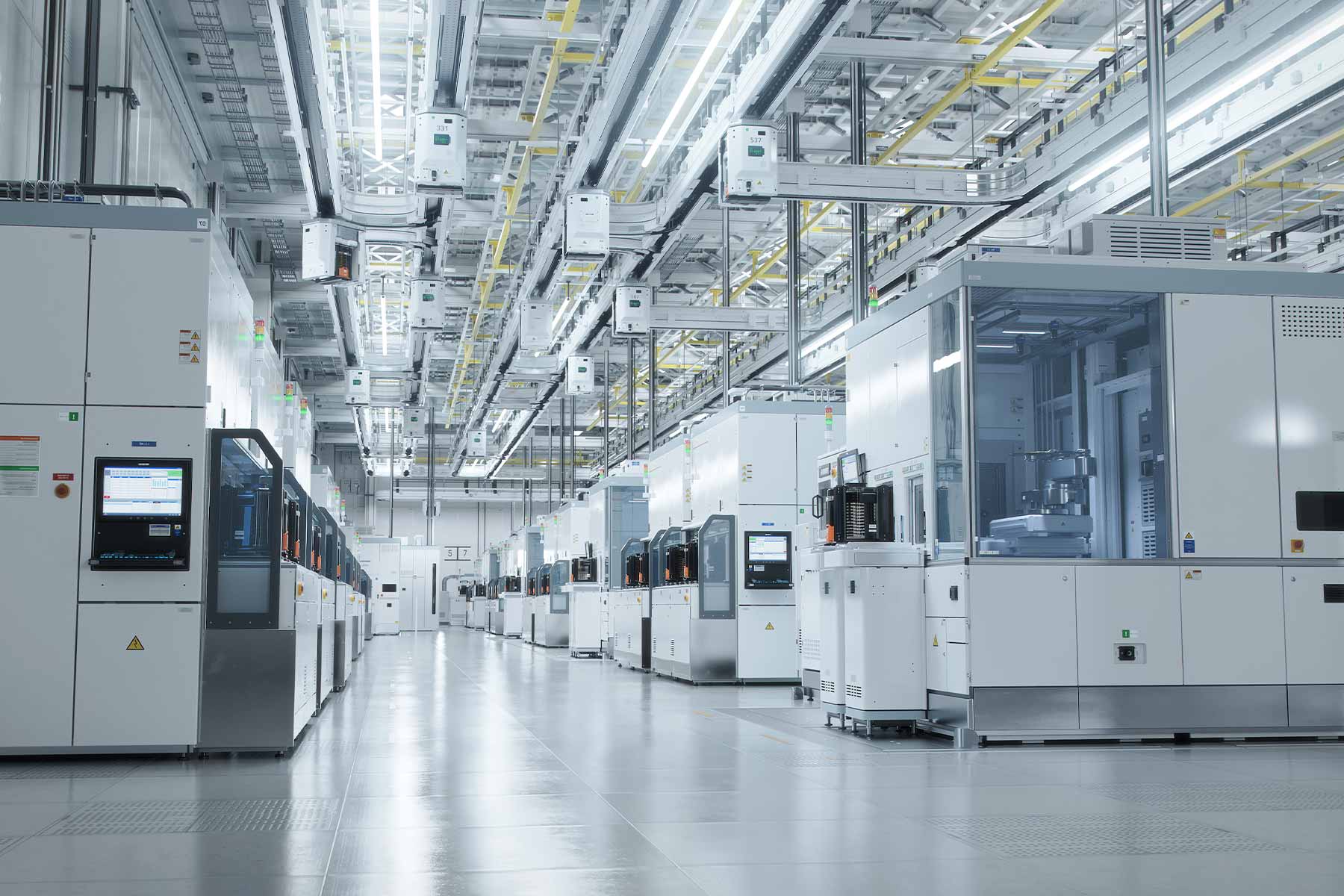
Semiconductor fabrication facilities and cleanrooms place demands on building infrastructure that go well beyond what a typical commercial building, or even a data center, is designed to handle. The floor beneath a fab or a cleanroom isn’t just structural—it’s part of the contamination-control envelope, part of the vibration-isolation strategy, and part of how power, process piping, and utilities reach some of the most precise manufacturing equipment in existence. A flooring decision that would be perfectly reasonable in a server room can be entirely wrong in a fab, and the reverse is often true as well.
That’s why raised flooring for these environments deserves its own evaluation rather than a default extension of whatever material a facility used in its office space or data center. A raised access floor system still provides the same underlying benefits in a semiconductor facility that it does anywhere else—organized underfloor infrastructure, serviceable access, and structural support for heavy equipment—but the specific material chosen to build that system carries far more operational weight in a cleanroom than it does in a conventional office or data hall.
Among the raised floor materials available, aluminum has become one of the preferred choices for many semiconductor and cleanroom applications, and not by coincidence. It combines exceptional structural strength with lightweight construction, corrosion resistance, and material characteristics that align unusually well with what highly controlled manufacturing environments actually require. Understanding why aluminum performs so well in these applications—rather than simply accepting it as an industry convention—requires looking at structural performance, contamination control, utility access, and long-term operational flexibility together, since choosing the right material means understanding how it contributes to all four at once.
TL;DR Quick Summary
- Semiconductor facilities require flooring that balances heavy equipment support, vibration control, and strict contamination standards simultaneously—requirements that conventional raised floor materials don’t always meet equally well.
- Aluminum’s combination of strength-to-weight ratio, corrosion resistance, and low particulate generation makes it particularly well suited to cleanroom and fab environments, even though it isn’t the least expensive option available.
- Material selection should never be evaluated in isolation from utility distribution, cleanroom classification requirements, and how easily the floor can be modified as manufacturing processes evolve.
- New and refurbished aluminum panels each have a place depending on availability, lead time, sustainability goals, and budget.
Why Semiconductor Facilities Have Different Requirements
Contamination control is the defining requirement that separates a semiconductor fab from nearly every other type of facility, and it shapes every other decision in the room, including the flooring. Cleanroom classifications specify strict limits on airborne particulate concentration, and every surface in the room—including the floor—either supports that classification or works against it. A material that sheds particulate, corrodes over time, or is difficult to clean thoroughly becomes a liability that undermines an otherwise well-designed cleanroom.
Precision manufacturing adds a second layer of demand. Semiconductor process equipment operates at tolerances where even minor vibration can affect yield, which means the floor supporting that equipment needs to contribute to vibration control rather than transmitting it. At the same time, that same floor often has to support extremely heavy process tools—some semiconductor manufacturing equipment weighs many times more than a typical server rack—while accommodating frequent equipment moves as production lines are reconfigured.
Utility access compounds the complexity further. Fabs typically route extensive electrical distribution, process piping, specialty gas lines, and communications infrastructure beneath the floor, often at a density well beyond what a data center or office environment requires. And equipment density itself keeps climbing as fabs pursue higher throughput and more advanced process nodes, meaning the floor has to accommodate not just today’s equipment layout but tomorrow’s higher-density reconfiguration as well.
No single requirement here is unique to semiconductor facilities on its own—data centers care about structural loads, hospitals care about cleanliness, offices care about flexibility. What’s unique is that a fab floor has to satisfy all of these demands simultaneously, at a level of rigor most other facility types never approach.
Why Aluminum Performs So Well
Aluminum’s advantages in this environment come down to a specific combination of material properties that happen to align almost perfectly with what semiconductor and cleanroom applications require—not a single standout feature, but several reinforcing ones working together.
Lightweight Construction
One of aluminum’s most noticeable advantages is its exceptional strength-to-weight ratio. Precision-cast aluminum panels achieve impressive structural performance through engineered geometry and reinforcing ribs rather than sheer material mass.
That lighter weight reduces the load transferred to the building’s structural slab compared to a concrete-filled steel system of similar performance, which can matter considerably in facilities where floor loading has to be carefully managed across large equipment footprints. It also makes individual panels easier and faster to remove and replace—a meaningful advantage in an environment where underfloor utility access happens frequently.
Corrosion Resistance
Semiconductor fabrication environments expose building materials to controlled humidity, specialty gases, and process chemicals that can accelerate long-term material degradation. Aluminum naturally resists corrosion, helping reduce maintenance concerns while minimizing the particulate contamination that corroding materials can introduce into cleanroom environments.
A corroding floor panel isn’t just a structural concern in a cleanroom—corrosion byproducts are exactly the kind of particulate contamination a cleanroom classification is designed to prevent. Aluminum’s natural resistance to this degradation removes an entire category of long-term maintenance risk.
Strength and Dimensional Stability
Precision manufacturing equipment depends on a floor system that maintains its structural integrity over decades of service. Aluminum panels resist warping, deformation, and dimensional changes under heavy loads, helping ensure consistent support for sensitive manufacturing equipment and maintaining tight floor tolerances throughout the facility. That dimensional stability matters more in a fab than almost anywhere else, since even small changes in panel geometry can affect how precisely equipment sits and how consistently the floor performs across a large, tightly toleranced installation.
Long service life
Durability becomes especially valuable in facilities where the building infrastructure often outlasts several generations of manufacturing equipment. Because aluminum resists corrosion, maintains its structural performance, and produces minimal particulate over time, properly specified systems can remain in reliable service for decades with relatively little maintenance.
A floor that resists corrosion, holds its structural rating, and doesn’t generate the particulate contamination that would otherwise accelerate wear tends to remain in reliable service for decades—a genuinely important consideration in an industry where the facility itself often outlasts several generations of the equipment it houses.
✓ Did You Know?: Because aluminum panels are typically cast rather than welded from formed sheets, manufacturers can build reinforcing ribs and structural geometry directly into the panel during casting—allowing high load capacity without the added weight a steel-and-concrete equivalent would require to achieve similar performance.
Structural Performance
Structural performance in a semiconductor facility has to account for conditions that go beyond what most raised floor applications ever encounter. Load capacity remains the starting point, but the load profile in a fab looks different from a typical data center: large manufacturing tools can weigh many times more than a fully populated server rack, and that weight is often concentrated on a small number of support points rather than distributed broadly across the floor.
Rolling loads deserve particular attention in this context. Semiconductor equipment doesn’t stay in one place for the life of the facility—production lines get reconfigured, tools get serviced and moved, and new equipment gets wheeled into position as manufacturing processes evolve. A floor that comfortably supports a stationary tool can still be damaged by the repeated passage of the heavy transport equipment used to move it, which is why rolling-load performance needs to be evaluated with actual equipment-moving routes in mind, not just final equipment placement.
Aluminum’s strength-to-weight advantage becomes particularly valuable here. A panel capable of supporting substantial concentrated and rolling loads while remaining lighter than a steel-and-concrete equivalent reduces cumulative stress on the building’s structural slab across a large equipment floor—a meaningful consideration in facilities where dozens or hundreds of heavy tools may be distributed across an extensive fab floor simultaneously.
⚠ Common Mistake: Assuming that because aluminum panels are lighter, they’re inherently less structurally capable than concrete-filled steel alternatives. Precision-cast aluminum panels are engineered specifically to deliver high load ratings despite their reduced weight—the material’s performance should be evaluated against actual test data for the specific product, not assumed from general material stereotypes.
Material Comparison
Choosing the right raised floor material for a semiconductor or cleanroom application means weighing structural performance, contamination characteristics, and cost against each other rather than defaulting to whichever material is most familiar from other facility types.
H3: Woodcore Panels
Although woodcore panels remain a cost-effective solution for many commercial environments, their characteristics make them poorly suited for semiconductor fabrication facilities. Moisture sensitivity, lower structural capacity, and the potential for particulate generation limit their usefulness in highly controlled cleanroom applications.
H3: Standard steel panels
Steel-based raised floor systems continue to perform well in many industrial and data center environments, offering excellent structural capacity and fire resistance. However, their additional weight and susceptibility to corrosion make them less desirable for many semiconductor manufacturing facilities where contamination control and long-term material stability are primary considerations.
Aluminum panels
For semiconductor fabrication and cleanroom environments, aluminum provides a combination of structural performance and environmental compatibility that few other materials can match. Its lightweight construction, corrosion resistance, and low particulate characteristics make it an excellent choice wherever contamination control and long-term reliability are equally important.
Raised Floor Material Comparison for Semiconductor and Cleanroom Applications
| Material | Advantages | Limitations | Typical Applications |
| Woodcore | Economical, good acoustics | Moisture sensitive, particulate-prone, lower load capacity | Offices, control rooms adjacent to (not within) cleanrooms |
| Hollow steel | Good fire resistance, moderate weight | Corrosion risk in chemical environments, performance varies by model | General data centers, non-corrosive industrial spaces |
| Concrete-filled steel | Highest general load capacity, excellent stability | Heaviest option, corrosion risk without protective finish | Mission-critical data centers, heavy industrial floors |
| Aluminum | Corrosion resistant, lightweight, low particulate generation, high strength-to-weight ratio | Higher material cost | Semiconductor fabs, cleanrooms, laboratories, pharmaceutical manufacturing |
No material is universally “best” outside the context of a specific application, and semiconductor facilities are a clear case where the highest-performing general-purpose material (concrete-filled steel) isn’t necessarily the right choice once contamination control enters the equation. For a broader look at how to weigh these tradeoffs against a facility’s full set of requirements, our guide to choosing the right flooring system covers the decision-making process in more depth.
Cleanroom Compatibility
Beyond structural performance, a raised floor’s compatibility with cleanroom operation depends heavily on how the material behaves at the particulate level—a set of requirements that has little equivalent in conventional commercial or data center flooring decisions.
Low particulate generation is the central requirement. Every surface in a classified cleanroom is expected to contribute as little airborne contamination as possible, and flooring is no exception—foot traffic, equipment movement, and routine panel removal all create some mechanical wear, and the question is how much particulate that wear generates and how easily it’s controlled. Aluminum’s resistance to corrosion and surface degradation directly supports this requirement, since corrosion byproducts are themselves a significant, ongoing particulate source in materials more prone to it.
Cleanability follows closely behind. Cleanroom floors require frequent, often rigorous cleaning protocols, and the surface finish needs to tolerate that cleaning regimen indefinitely without degrading. A finish that wears down, develops microscopic surface damage, or reacts poorly to cleanroom-grade cleaning chemicals becomes a long-term particulate source in its own right, undermining the classification it’s meant to support.
Chemical resistance matters for the same underlying reason. Semiconductor manufacturing involves a range of process chemicals, and any flooring material used in or near production areas needs to withstand exposure without degrading, off-gassing, or reacting in ways that could compromise either the cleanroom environment or the floor’s structural integrity over time. Aluminum’s natural resistance to many common process chemicals, combined with appropriate protective finishes where needed, makes it a dependable choice for these demanding conditions.
Together, these characteristics are why aluminum shows up so consistently in cleanroom specifications—not because it’s a premium material chosen for its own sake, but because its physical properties happen to solve the specific contamination-control problems these environments are built around.
Utility Distribution
Raised floors support extensive underfloor infrastructure in any application, but semiconductor facilities push that function further than almost any other environment. Electrical distribution, process piping, specialty gas lines, and communications infrastructure all typically run beneath the floor, often layered with a density that requires careful coordination during both design and ongoing operation.
This is where access flooring delivers value that goes well beyond the panel material itself—the underfloor plenum functions as organized, accessible infrastructure space precisely because individual panels can be lifted for inspection, modification, or repair without disrupting the surrounding cleanroom floor or the equipment it supports. In a facility where production changes frequently, and utility routing has to keep pace, that accessibility isn’t a convenience; it’s operationally essential.
Getting this right starts with a properly executed raised access floor installation, since the coordination between underfloor utility routing and floor panel layout needs to be planned from the outset rather than retrofitted after the fact. Facilities that treat utility coordination as an installation-phase afterthought tend to end up with underfloor congestion that complicates future access—exactly the kind of problem a well-planned aluminum system, installed with utility routing in mind from the start, is designed to avoid.
Long-Term Flexibility
Semiconductor plants change more than most facility types, and the pace of that change tends to accelerate rather than slow down over a facility’s operational life. Manufacturing equipment gets replaced as process nodes advance, utility requirements shift as new tools bring different power, gas, or piping demands, and production lines get reconfigured to accommodate new products or higher throughput.
A raised floor system built for this environment needs to accommodate that pace of change without requiring disruptive reconstruction every time equipment or utilities shift. Aluminum’s durability and dimensional stability support this kind of long-term flexibility directly—a floor that holds its structural and dimensional performance over decades of service gives a facility room to reconfigure repeatedly without the floor itself becoming the limiting factor. Modular panels that can be removed, relocated, or replaced individually mean that a production line reconfiguration doesn’t require touching the surrounding floor at all, keeping disruption contained to exactly the area being changed.
Refurbished vs. New Aluminum Panels
Not every application requires new panels, and understanding when refurbished aluminum flooring makes sense is a genuinely useful part of planning a fab or cleanroom floor rather than a compromise to be avoided.
Availability and Lead Time
Project schedules frequently influence flooring decisions just as much as technical specifications. Depending on the size of the project and manufacturer inventory, lead times for new aluminum panels can vary considerably, making refurbished inventory an attractive option for facilities working within aggressive construction timelines.
Refurbished panels sourced from decommissioned or upgraded systems can sometimes be available considerably faster, which matters when a production timeline is the binding constraint.
Cost
Budget considerations are important, but the purchase price represents only one part of the overall investment. Refurbished aluminum panels can provide meaningful cost savings while still delivering the structural performance and cleanroom compatibility many facilities require, particularly when they have been professionally inspected and refinished.
That said, cost shouldn’t be evaluated purely on the initial purchase price—our raised floor cost guide covers how to weigh installed cost, expected service life, and long-term maintenance together rather than comparing sticker prices alone.
Sustainability
Many organizations now evaluate construction materials through both financial and environmental lenses. Reusing high-quality aluminum panels extends the useful life of existing materials, reduces manufacturing demand, and supports sustainability initiatives without sacrificing the long-term performance expected in semiconductor and cleanroom environments.
Whether new or refurbished panels are the right choice, working with experienced raised floor manufacturers matters considerably in this space—cleanroom and semiconductor applications benefit from suppliers who understand contamination-control requirements specifically, not just general raised floor construction, and who can support the facility with matching components over the system’s long service life.
📋 Buyer’s Tip: When evaluating refurbished aluminum panels, confirm not just structural condition but also that the refinishing process meets the cleanroom’s particulate and chemical-resistance requirements. A structurally sound panel with a compromised or improperly refinished surface can still undermine contamination control even if it performs perfectly from a load-bearing standpoint.
Final Thoughts
Material selection for a semiconductor or cleanroom raised floor should support today’s equipment and contamination requirements while leaving room for the facility’s future expansion, process changes, and equipment evolution—not just satisfy the specifications on hand at the time of installation. Aluminum’s combination of strength, light weight, corrosion resistance, and low particulate generation makes it a consistently strong fit for these demanding environments, even though it isn’t the least expensive material available.
For facilities working through the broader specification process—load capacity, understructure, airflow, and material selection together—our raised floor buying guide covers the full set of decisions that determine how well a raised floor system will perform over its operational lifetime, in a fab or any other mission-critical environment.