
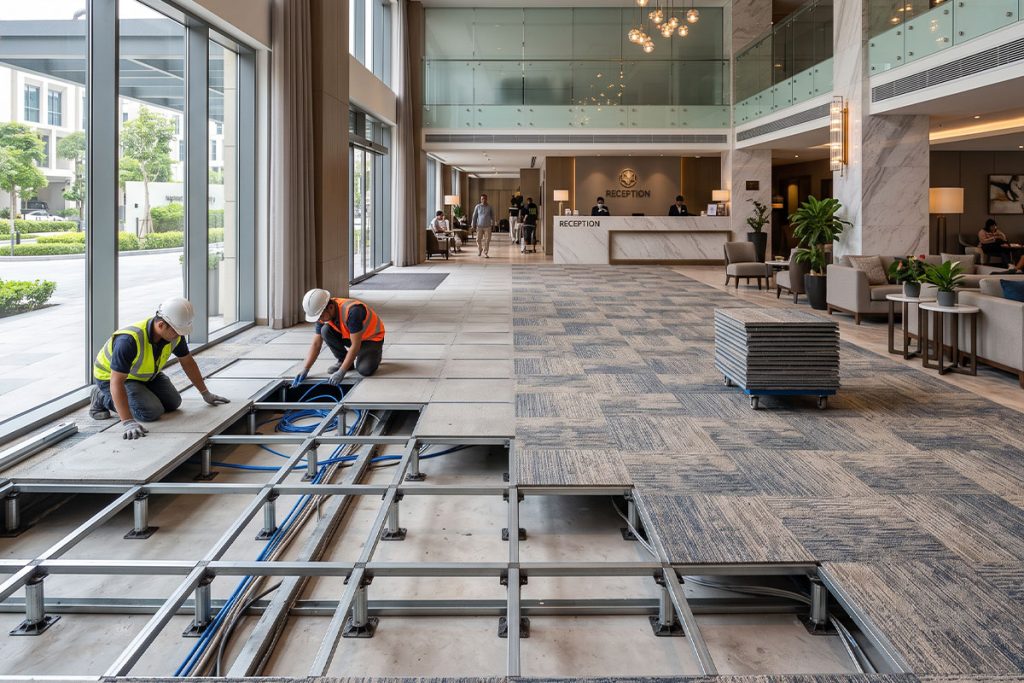
ESD carpet flooring
ESD carpet flooring is a specialized floor covering designed to limit static buildup and provide a controlled path for charge dissipation when correctly installed and grounded. It can support static protection in technical workplaces, including suitable data center and control-room applications. Choosing it means evaluating the complete system—not just the carpet—and comparing its performance with ESD vinyl and access-floor laminate. (staticworx.com)
What is ESD carpet flooring, and how does it work?
ESD carpet flooring uses static-control fibers and an electrically functional backing to help manage electrostatic charge. In a properly specified installation, these elements connect to an approved grounding arrangement. The floor, installation materials, grounding connections, and footwear must work together to control charge on people moving through the space. (staticworx.com)
That distinction matters because anti-static flooring is not automatically a personnel-grounding system. A product may reduce charge generation without providing the verified person-to-ground performance needed for handling sensitive electronics. Shaw Contract, for example, distinguishes low-voltage, anti-static, and grounded ESD solutions within its flooring offering. Ask which function a proposed carpet actually provides. (shawcontract.com)
Look beyond a resistance figure on a sample sheet. The EOS/ESD Association explains that footwear and flooring can each have suitable resistance values yet perform poorly together because of contact resistance and charging behavior. Test the intended combinations rather than assuming that separately acceptable components create an acceptable installation. (esda.org)
Data centers and the reality of server static electricity
Server static electricity is not simply a problem inside a server enclosure. People, carts, and furniture moving across a floor can accumulate charge, which may discharge when they contact equipment. IBM identifies floor-covering interactions as a potential source of static buildup and warns that abrupt discharges can affect electronic equipment. (ibm.com)
Maintenance deserves particular attention. Opening equipment exposes components that require handling precautions beyond the room’s floor specification. IBM identifies boards, adapters, and drives as static-sensitive and recommends measures such as appropriate wrist-strap use, protective packaging, and handling boards by their edges. ESD flooring supports these procedures; it does not replace them. (ibm.com)
For planning purposes, separate the facility into operating zones:
- Server aisles: Review equipment requirements, cleaning procedures, rack movement, and access needs.
- Repair benches: Establish component-handling controls alongside the flooring specification.
- Control rooms: Evaluate personnel movement and the footwear people actually wear.
- Connecting routes: Include carts and transitions in the assessment rather than stopping at the server-room doorway.
Use this zoning exercise to define different requirements where appropriate, not to assume one material belongs everywhere.
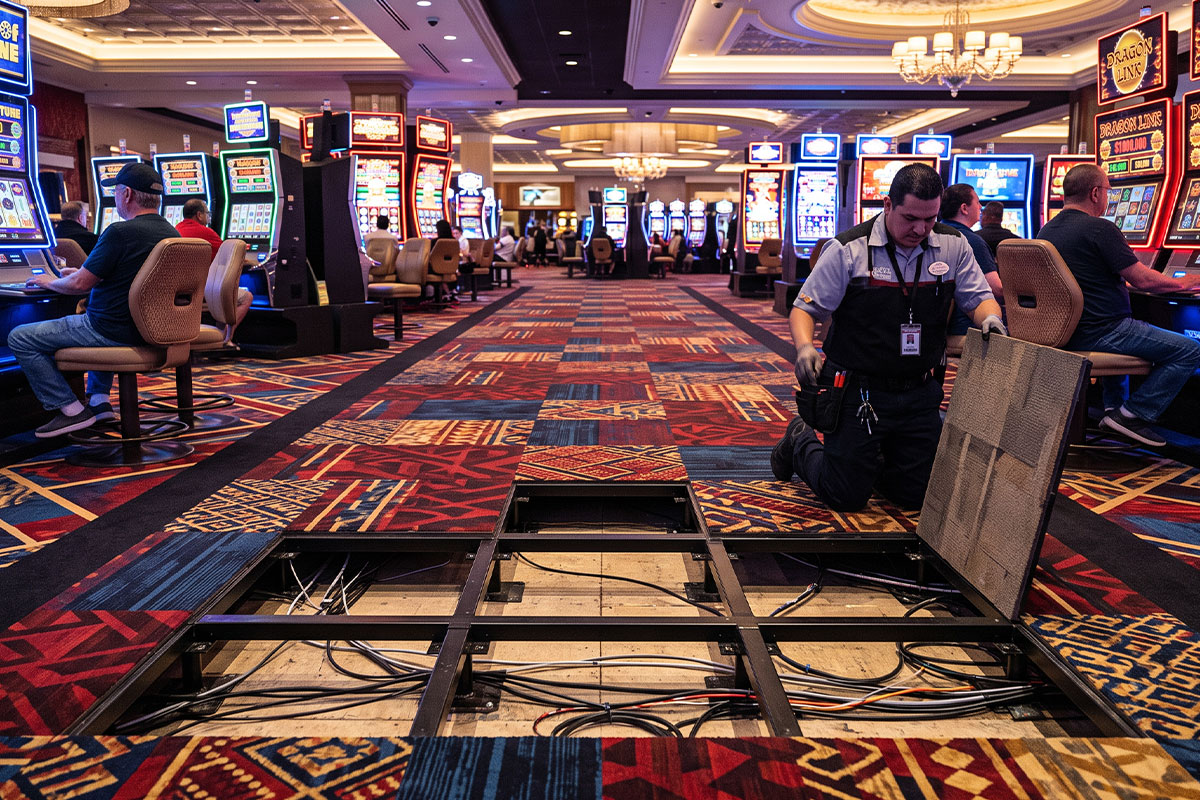
How does ESD carpet compare with vinyl and Formica HPL?
ESD carpet, ESD vinyl, and access-floor HPL are different surface options, while raised floor panels form the supporting access system. Compare their documented electrical performance, installation requirements, maintenance, and compatibility with the intended activities. Neither a material name nor an “ESD” label proves that the finished floor meets your project’s requirements. (staticworx.com)
ESD carpet for modular technical spaces
Purpose-built ESD carpet tiles can suit technical spaces that need a carpeted finish and repeated access below the floor. Some systems align individual carpet tiles with individual raised panels, allowing selective removal instead of disturbing a larger area. StaticWorx documents several such installation arrangements, including product-specific options without full-spread conductive adhesive. (staticworx.com)
Do not extend those installation claims to every carpet tile. Confirm the approved backing, attachment method, panel compatibility, and grounding arrangement for the exact product. For a data hall, also ask the facility team to assess cleaning, contamination requirements, and equipment movement before selecting carpet solely for appearance.
ESD vinyl for controlled working areas
ESD vinyl is available in conductive and static-dissipative formulations. Forbo’s Sphera range illustrates this distinction with separate products and documented electrical characteristics. Its technical information also reports footwear-and-flooring performance separately from floor resistance, reinforcing the need to evaluate both material properties and the installed working system. (forbo.blob.core.windows.net)
Installation details vary. Some systems require conductive adhesive throughout; others use a conductive backing with conductive adhesive only at specified copper-strip connections. Forbo documents the latter arrangement for Sphera SD and EC. Follow the selected manufacturer’s instructions rather than importing an adhesive or grounding layout from another vinyl product. (forbo.blob.core.windows.net)
For server maintenance areas, request evidence covering intended footwear, cleaning products, substrate preparation, and expected traffic. Treat these as procurement questions, not details to resolve after delivery.
ESD Formica HPL for access-floor finishes
When evaluating ESD Formica HPL, distinguish the branded access-floor product from generic decorative laminate. Formica describes its Access Flooring Tile as having low static generation and retention, with impact resistance and straightforward cleaning. Its technical guide identifies anti-static floor-tile grades; this is more specific than simply requesting “Formica.” (formica.com)
HPL is a relevant option for data centers: Tate recommends standard high-pressure laminate tile for computer rooms and server rooms requiring static protection. However, that recommendation does not establish that every HPL finish meets a particular component-handling requirement. Request the exact grade, applicable test results, and compatibility with the complete panel assembly. (tateglobal.com)
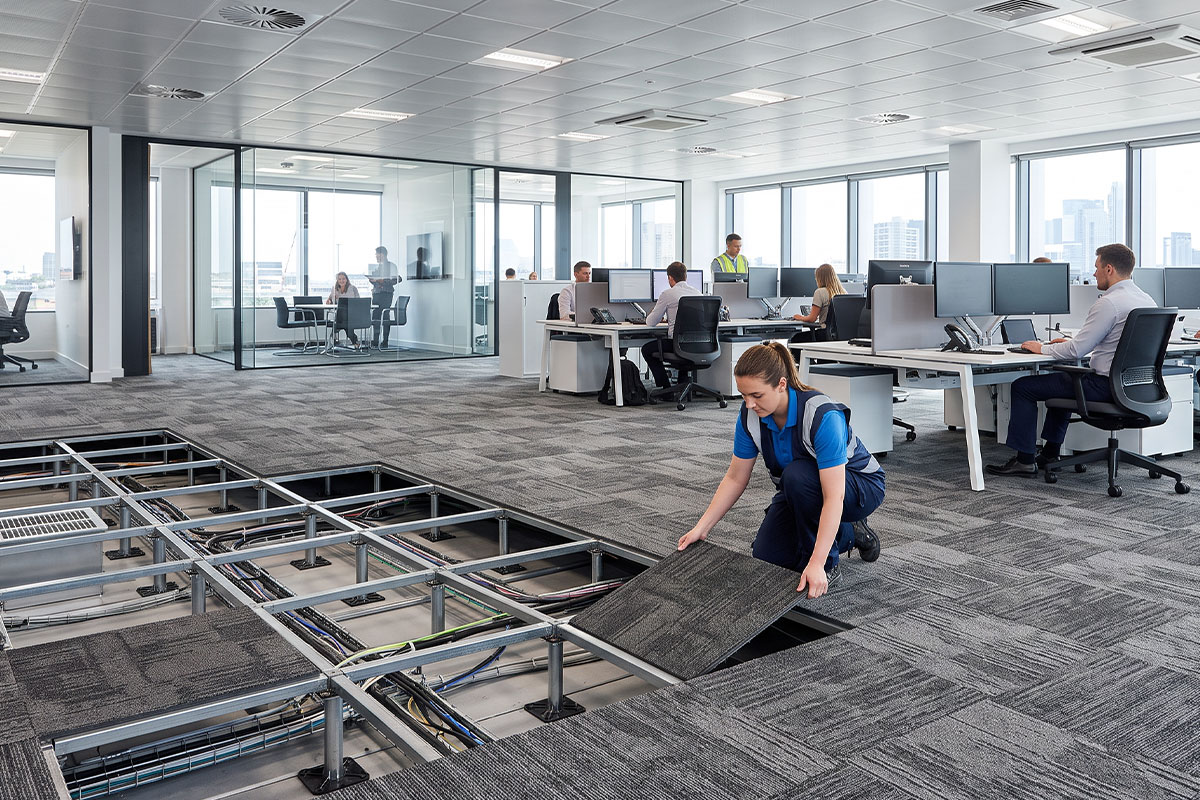
ESD raised floor panels are part of the system
ESD raised floor panels combine an accessible structural floor with a selected surface finish. Their underfloor space can accommodate services such as electrical and data distribution or air delivery. The finish and supporting structure therefore need coordinated specifications rather than separate purchasing decisions. (tateglobal.com)
Electrical continuity needs explicit attention. IBM calls for a conductive path to ground from metallic raised-floor structures, including metal panels. Tate likewise states that access floors require grounding and advises evaluation by a local electrical contractor because requirements vary. A conductive surface above an unverified connection is not a complete grounding strategy. (ibm.com)
Structural performance is a separate requirement. A finish’s electrical characteristics say nothing about whether the panel assembly can accommodate a loaded rack or repeated cart traffic. Tate’s specifications distinguish concentrated, ultimate, and rolling loads, with testing performed on defined support arrangements. Ask the design team to check the actual equipment and movement routes against the appropriate ratings. (tateglobal.com)
Also plan how technicians will lift panels, handle attached finishes, and reinstall them. Request a demonstration of the proposed access method before approving a large installation.
A practical specification and acceptance checklist
Start with the activities and equipment the space must support. Then turn those requirements into written acceptance criteria. Use the following checklist to keep a static control flooring proposal focused on verifiable performance rather than marketing terminology.
- Define the operating conditions. Record whether the area houses enclosed servers, exposed components, staffed consoles, or several activities. Identify the relevant equipment instructions and facility ESD procedures.
- Request complete product documentation. Obtain the exact carpet, vinyl, or HPL designation, installation instructions, electrical test methods, and maintenance guidance. Do not accept an unrelated product’s report as evidence.
- Identify the grounding arrangement. Require a documented connection method and responsibility for verifying it. Include the raised-floor assembly where applicable. (tateglobal.com)
- Test the intended footwear combinations. Measure person-through-footwear-to-ground resistance and walking body voltage. The EOS/ESD Association recommends both because resistance alone cannot establish charging behavior. (esda.org)
- Include mobile equipment. Where carts need a grounding path, verify compatible conductive or dissipative wheels and electrical continuity through the equipment. Ordinary insulating wheels can interrupt that path. (esda.org)
- Agree on handover evidence. Specify who tests the installation, how results are recorded, and what happens if acceptance criteria are missed.
Keep the accepted reports with the facility’s maintenance records. They provide a reference when footwear, cleaning products, or floor sections change.
Maintenance keeps the specification meaningful
Cleaning is part of electrical performance, not just presentation. The EOS/ESD Association warns that cleaning materials, polishes, and surface contamination can change contact resistance and charge generation. Use the selected flooring manufacturer’s approved procedures instead of assuming an ordinary commercial floor treatment is suitable. (esda.org)
For Formica access flooring, the manufacturer recommends dust removal and lightly damp cleaning with mild soap or detergent. Other surfaces have their own requirements, so provide separate instructions where carpet, vinyl, and HPL share a facility. (sitecore-www.formicadocs.info)
The takeaway: choose electrostatic discharge flooring as a documented system. Match the surface to the work, verify its installation and footwear compatibility, and assign ongoing maintenance responsibility before the floor enters service.