

A raised floor can remain serviceable for decades, long after the manufacturer has discontinued the original panel model. When one panel, or a handful, becomes damaged, replacing the entire floor often makes little sense. The pedestals and stringers are sound, the room is operating, and the only problem is a few panels that no longer do their job.
That’s when used, surplus, and refurbished panels become a practical option. But compatibility and condition matter far more than appearance or price. A used panel is only a good replacement if it fits the existing system, has been inspected for damage, and can carry the loads the floor will actually see. This guide explains what the different panel conditions mean, how used panels are inspected and refurbished, when they make sense, and when new panels are the better choice.
TL;DR: Buying Used Raised Floor Tiles
- Used panels can be practical replacements for legacy and discontinued floors.
- “Used,” “surplus,” and “refurbished” describe different product conditions.
- Exact panel dimensions alone do not establish compatibility.
- Inspect used panels for structural, finish, edge, corrosion, and modification damage.
- A properly matched refurbished panel may be more practical than replacing an otherwise serviceable floor.
What Are Used Raised Floor Tiles?
Used raised floor tiles are structural access-floor panels that have been previously installed and are being resold for reuse. The same underlying component, described in more detail in our guide to data center floor tiles, can reach the secondary market in several different conditions, and the terminology matters because each one carries different implications for inspection, finish, and compatibility.
- Used or takeout panels were previously installed and removed from another floor.
- Surplus or new old stock (NOS) panels were manufactured but may never have been installed, often left over from prior projects or discontinued inventory.
- Refurbished panels are previously manufactured panels that have been inspected and restored, potentially including new HPL, edge treatment, cleaning, or other finish work.
- Replacement panels are the broadest term: any panel sourced to replace an existing one, whether new, used, surplus, or refurbished.
| Panel Type | Previously Installed? | Restored? | Typical Use |
| New | No | No | New systems and replacements |
| Surplus / New Old Stock | No | No | Legacy replacement |
| Used / Takeout | Yes | No | Compatible replacement |
| Refurbished | Yes | Yes | Legacy and finish-matched replacement |
Why Facilities Use Used or Refurbished Raised Floor Panels
Most buyers in this market aren’t shopping for a bargain. They have a specific problem. The original manufacturer has discontinued the panel, or the facility needs only a handful of replacements for damaged panels. An HPL finish may have deteriorated, an expansion may need panels that match an existing grid, or the facility simply wants spare inventory on hand for future repairs. In each case, the existing floor is structurally serviceable, and the budget doesn’t justify wholesale replacement.
Legacy floors are where this matters most. A floor installed decades ago may sit on an understructure that is still in good working order, while the panel design it was built around has been redesigned or retired. Replacing every panel to solve a problem with five of them means paying for material, labor, and downtime that the floor doesn’t actually need. A matched used or refurbished panel lets the facility fix the specific problem and leave the rest of the floor alone.
The pedestal and stringer grid dictate what will fit. Any replacement panel has to work with the existing raised access floor system, which is why identifying that system comes before choosing a panel. For legacy floors, the secondary market is often the most realistic source of compatible material, and facilities can source replacement raised access floor panels once they’ve properly identified the existing panel.
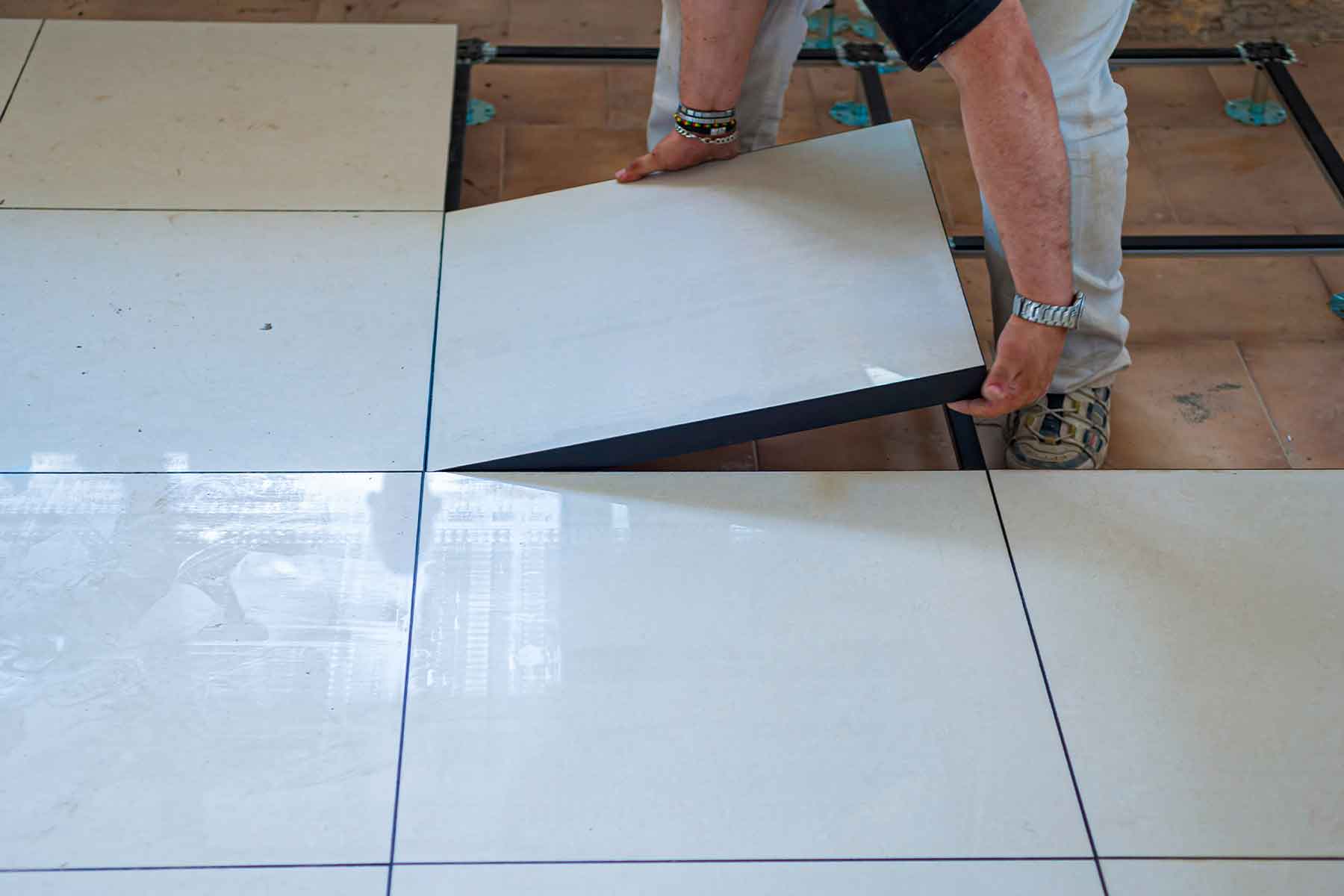
Are Used Raised Floor Tiles Safe?
They can be appropriate when they are correctly identified, compatible with the existing system, inspected for damage, and suitable for the anticipated loads. That’s a qualified answer because condition varies enormously from panel to panel, and a used panel’s history is rarely fully known.
A proper inspection looks for panel flatness, corrosion, cracks, bent steel, corner damage, edge damage, previous cutouts, surface delamination, and moisture damage in woodcore panels. The underside deserves as much attention as the top, along with any evidence of overload and the condition of fasteners and corner locks.
⚠ Common Mistake: Assuming a clean or newly resurfaced panel is structurally sound. A fresh finish says nothing about the steel, core, or corners underneath it.
Panel condition is only part of the picture. A compatible replacement can’t fix a damaged, improperly installed, or out-of-level understructure, so address bent pedestals, missing stringers, or poor seating first. Our guide to raised access floor installation requirements covers those conditions.
How Used Raised Floor Panels Are Inspected
A reputable supplier evaluates used panels before resale or refurbishment, though this is a practical process rather than a certification. A typical sequence:
- Identify the panel type and manufacturer where possible.
- Inspect overall panel geometry for flatness, twist, and squareness.
- Examine the underside and corners, where structural damage and identifying details are most visible.
- Check the edges for damage, deformation, and edge-trim condition.
- Inspect the surface finish for wear, delamination, and adhesion problems.
- Look for previous field modifications such as cutouts, patches, or repairs.
- Determine whether refurbishment is appropriate or whether the panel should be rejected.
- Verify compatibility with the intended system before offering the panel as a replacement.
Panels that fail at any step shouldn’t be dressed up and resold. They should be rejected.
Two habits separate careful inspection from a quick visual check. First, evaluate panels as individual pieces, not as a batch, because condition can vary widely even among panels pulled from the same floor. Second, any panel that has been modified, such as one with a large cutout, a repair, or a patched corner, deserves extra scrutiny, since those changes affect how the panel carries load. When a supplier can’t tell you how a panel was inspected, or won’t say which ones were rejected, treat that as useful information.
How Raised Floor Panels Are Refurbished
Panels are refurbished because the structural panel is often still sound even when the finish is worn, damaged, or no longer matches the surrounding floor. Restoring the surface can make an otherwise compatible panel usable in an existing installation.
The process generally runs as follows:
- Identify the panel.
- Inspect its structural condition.
- Reject damaged or unsuitable panels.
- Remove damaged HPL and edge materials where applicable.
- Prepare the panel surface.
- Apply compatible new HPL using the appropriate adhesive and process.
- Replace or recreate the edge treatment.
- Inspect the finished panel.
- Verify dimensional and system compatibility.
Refurbishment can restore surface appearance, HPL condition, and edge finish. It cannot repair an unsuitable structural panel simply by covering it with new laminate.
🏢 Industry Insight: Refurbishment should begin with the structural panel, not the finish. The most important decision is which panels to reject before applying any laminate.
Once you understand what refurbishment involves, you can review the refurbished raised floor panels available for legacy systems, including Tate, USG/DONN, and Liskey products.
Used vs. Refurbished vs. New Raised Floor Panels
No option is universally best. The right choice depends on the system, the quantity, and what’s actually available.
| Factor | Used | Refurbished | New |
| Initial cost | Often lower | Often lower than new | Usually highest |
| Availability for legacy systems | Often strong | Often strong | May be limited |
| Finish condition | Existing | Renewed | New |
| Lead time | Inventory-dependent | Inventory + refurbishment | Manufacturer-dependent |
| Compatibility | Must verify | Must verify | Must verify |
| Product documentation | May be limited | May be limited | Usually strongest |
| Best use | Matching existing systems | Legacy replacement needing renewed finish | New systems and readily supported products |
Notice that compatibility has to be verified for all three, including new panels. A new panel is not automatically the right panel for an older floor.

How to Identify the Correct Replacement Panel
Matching an existing panel takes more than measuring its width and length. The essentials to document are the exact dimensions, overall thickness, edge profile, underside configuration, manufacturer markings, HPL thickness, pedestal head design, stringer type, and finished floor height. Photographs of the underside and understructure are often more useful than photographs of the top surface.
Our raised access floor panel identification guide walks through this process step by step, including which measurements and photographs are most useful, so it doesn’t need to be repeated here.
What Load Ratings Should a Used Panel Meet?
A panel that was acceptable in its original installation is not automatically appropriate for the equipment in its new location. The relevant ratings to review are concentrated load, rolling load, and the distinction between ultimate load and working or design load. Ultimate load describes failure, not a safe operating figure.
Compare those ratings against the actual equipment the panel will support, including any new equipment planned for the space and the routes heavy equipment will take when it’s moved. Rolling loads along equipment paths can demand more than the final resting position does. If load data isn’t available for a particular used panel, that’s a limitation to weigh, not a detail to skip.
Location matters as well. A panel pulled from a lightly loaded office floor may be a poor match for a data hall with heavy racks, even if it matches the grid perfectly. Where a used panel will sit under concentrated equipment loads, or along a route used for heavy moves, confirm its rating against that specific use. For lower-demand positions, the same panel may be entirely appropriate.
When Used Raised Floor Tiles Are a Good Value
Used and refurbished panels tend to make the most sense in a few specific scenarios: replacing one or several damaged panels, keeping a discontinued system running, matching a legacy floor, maintaining spare inventory, expanding an existing grid, or avoiding replacement of a floor that’s otherwise serviceable.
A fair financial comparison goes beyond the panel price. It should include freight, finish work, identification time, installation, any modifications to the system, and the cost of replacing a larger floor area if compatible panels can’t be found. Our guide to factors affecting raised-floor costs covers how these variables add up.
💡 Pro Tip: The lowest-priced panel is not a savings if it does not fit the existing grid.
Pricing varies by manufacturer, model, availability, quantity, finish, freight, and refurbishment requirements, so used or refurbished panels may be significantly less expensive than new ones in some cases and not in others.
When New Panels May Be the Better Choice
Used panels aren’t always the answer, and a supplier who only recommends them isn’t giving you the full picture. New panels are worth considering when:
- You’re building a new system.
- The existing floor can’t be reliably identified.
- Required loads exceed what the legacy panels can carry.
- Large quantities are needed, and compatible new production exists.
- Existing panels show widespread deterioration.
- System dimensions or understructure are being changed.
- Documentation or warranty requirements call for new components.
For these situations, DCFT offers new raised floor panels across solid and airflow configurations. If the problem has grown beyond isolated panel replacement, it may be time to choose the right raised access floor system rather than continue patching an aging one.
Common Mistakes When Buying Used Raised Floor Tiles
- Buying by nominal 24″ × 24″ size. Nominal size doesn’t establish compatibility.
- Matching by top finish only. Many panels look alike from above.
- Ignoring the underside configuration. It often reveals the manufacturer and the real fit.
- Assuming similar-looking panels are interchangeable. Edge profile, thickness, and corners can differ.
- Ignoring rolling loads. Equipment routes can be harder on panels than final positions.
- Buying panels with large previous cutouts. These can compromise strength.
- Assuming new HPL means a structurally new panel. The finish doesn’t reset the panel’s history.
- Not buying spares when compatible inventory is available. It’s easier to buy them now than to find them later.
- Failing to inspect the understructure. A good panel can’t fix a bad pedestal or stringer.
Questions to Ask Before Purchasing Used or Refurbished Panels
📋 Buyer’s Tip: Ask these questions before you order, and expect specific answers.
- Was the panel previously installed?
- Has it been refurbished?
- What manufacturer and model is it?
- What are its exact dimensions?
- Is the HPL original or replacement?
- What is the condition of the underside?
- Does it have previous cutouts?
- What load data is available?
- Which understructure is it compatible with?
- Are additional matching panels available?
- What happens if it does not match?
Frequently Asked Questions About Used Raised Floor Tiles
Are used raised floor tiles safe?
They can be appropriate when correctly identified, compatible with the existing system, inspected for damage, and suitable for the anticipated loads. Condition varies, so inspection matters more than whether a panel is used or new.
Can used raised floor panels support server racks?
Possibly, depending on the panel’s construction, condition, and load ratings compared with the equipment’s concentrated and rolling loads. Verify load data for the specific panel rather than assuming it from appearance or age.
What is the difference between used and refurbished floor panels?
A used panel was previously installed and is resold as removed. A refurbished panel has been inspected and restored, which may include new HPL, edge treatment, and cleaning. Refurbishment restores finish, not structural integrity.
Can discontinued raised floor tiles still be found?
Often, through surplus inventory, used panels, or refurbished stock, but you must identify the existing panel first. Availability varies by manufacturer and model, and not every discontinued panel can be sourced.
Can old raised floor panels be resurfaced?
Yes, if the structural panel is sound. You can remove damaged HPL and replace it with compatible new laminate. Reject panels with structural damage rather than resurfacing them.
Are all 24″ × 24″ raised floor panels interchangeable?
No. Panels with the same nominal size can differ in thickness, edge profile, corner details, underside construction, and understructure compatibility. Exact measurements and construction details must match.
How do I identify an existing raised floor panel?
Document exact dimensions, thickness, edge profile, underside, corners, markings, HPL thickness, pedestal heads, and stringers, and photograph them. Our identification guide covers the full process.
Are used raised floor panels cheaper than new panels?
Often, but not always. Price depends on manufacturer, model, availability, quantity, finish, freight, and refurbishment needs. Compare total cost, including finish work and installation, not just the panel price.
Continue Building Your Raised Flooring Knowledge
- What Are Data Center Floor Tiles?: Panel construction, materials, load ratings, finishes, and sizing in detail.
- Raised Access Floor Panel Identification: A practical guide to identifying unknown and discontinued panels.
- Replacement Access Floor Panels: The next step for sourcing compatible panels once your system is identified.
- Raised Access Floor Systems: The broader guide to panels, pedestals, stringers, finishes, accessories, and how the system operates.
- How to Choose the Right Raised Access Floor System: For readers evaluating whether a larger system upgrade is necessary.
- Raised Access Floor Installation: Understructure setup, panel installation, leveling, perimeter work, and inspection.
Need Help Finding a Used or Refurbished Replacement Panel?
Choosing the correct panel takes more than matching a color or a nominal size. DCFT works with new, surplus, used, refurbished, and legacy panels, depending on compatibility and availability, and can help you find a compatible replacement panel once your existing system is identified.
To get started, send:
- A top photograph of the panel
- An underside photograph
- A corner or edge photograph
- The exact width and length
- The overall panel thickness
- The HPL thickness, if applicable
- Photographs of the pedestals and stringers
- Any manufacturer markings or stamps
- The quantity you need
The DCFT team can review what you send and help determine the most appropriate next step.